Rooted in Resistance: Latinx Queer and Trans People in Lowrider Culture
Lowrider culture is almost always portrayed as straight, male, and machista. That narrative has long erased the contributions and lived experiences of women, queer people, and trans people who have always been part of la cultura.
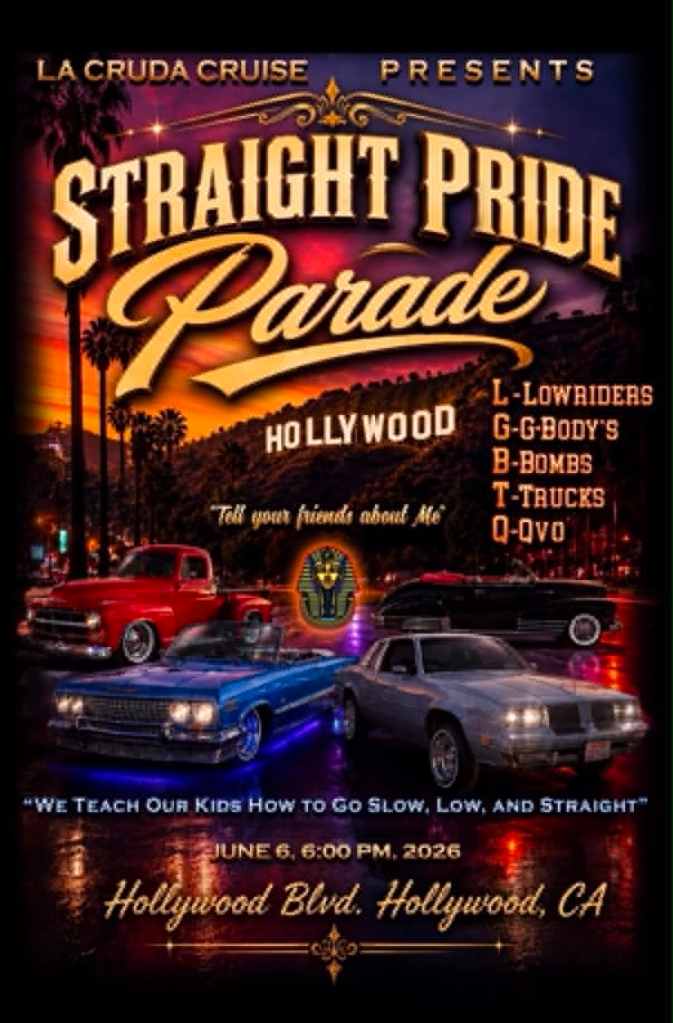
Recently, a lowrider car club thought it was a good idea to organize a pendejada called the "Straight Pride Parade" cruise in Hollywood. Events like this don't emerge in a vacuum. They happen when some people feel the need to remind everyone who they think belongs and who doesn't. At its core, it was an expression of machismo, male fragility, and gatekeeping masquerading as straight pride.
Homophobia, transphobia, and sexism are not badges of honor. They are expressions of the same exclusionary thinking that generations of lowriders have fought against. They betray the very spirit of resistance that lowrider culture was built upon.
Lowrider culture has always been rooted in resistance. Resistance to racism. Resistance to police harassment. Resistance to criminalization. Resistance to invisibility. Resistance to being told we don't belong. Our rides have always been more than cars. They are mobile art canvases, declarations of identity, acts of cultural survival, pride, and resistance.
That spirit of resistance cannot stop at the garage door. A culture built on refusing to be erased cannot turn around and then try to erase its own people.
Latinx queer and trans people are not newcomers to the lowrider scene. We've been cruising these streets with you since the very beginning of this cultural movement. On Alameda in El Chuco. On Whittier Boulevard in L.A. On Calle 24 in La Mission. On Story and King in San Jose. At Chicano Park in San Diego. On Central Avenue in Albuquerque. And in every community where lowriders roll.
We were, and continue to be, in the garages, behind the chain wheels, at the car shows, under the hoods, in the passenger seats, and in front of and behind the cameras, creating and inspiring the art.
We painted the murals, laid the pinstripes, rebuilt the engines, installed the hydros, and helped tell the stories that filled the pages of lowrider magazines.
We have always been part of building this culture. Not as guests. Not as outsiders. As part of its history. Desde siempre.
And yet, many of us learned early on that acceptance was often conditional. Belonging often meant hiding parts of ourselves. Inclusion came with expectations about who we could be and how visible we could become.
When I see social media posts claiming "there's no such thing as a gay cholo/a” or “gay people don’t own lowriders," I just shake my head. Clueless.
You do know one of us. Chances are you know several of us. Somos familia. We are your carnales, your homies, your primos y primas. But for many of us, you've only known the parts of ourselves we felt safe showing you. Not because we wanted to hide, but because we learned what could happen if we didn't.
I grew up in lowrider culture and was a cholx in my youth. Many of my relatives were in the scene, including my aunt who led a chola gang. I came out in this community at the very young age of twelve in the 1970s. Looking back, that was an incredibly brave and dangerous thing to do in El Paso, a conservative, predominantly Chicano community deeply steeped in machismo and heterosexism. It was a heavy burden to carry, and I would quickly learn why so many others like me could not take the same risk and chose to keep their queer and trans identities hidden.
Sometimes silence isn’t weakness. It's survival.
One day, I'm going to write about some of these experiences. But not today.
Today, I'm thinking about those young Latinx queer and trans kids who stop and admire lowriders at our events and feel a pull they can't quite name. An ancestor’s whisper. A connection to something bigger than themselves. Then they tell themselves: No es para mí. That they wouldn't be welcome. That they don't fit. That there is no place for them in this culture.
To those kids, I want to say: Eso no es cierto. There are people just like you and me who exist within our lowrider communities. Esta cultura también es tuya. You belong. Reclámala. Learn the builds. Learn the history. Save up for your ride (it took me many years to save for mine). Get in the garage and claim your heritage.
I’m not aware of any explicitly queer or trans lowrider car clubs that exist at the present but I believe one day there will be enough of us who are out to form one. For now, there are a growing number of lowrider clubs that openly welcome queer and trans members. Find them. Support them. Help them grow.
Also know this: You don't need anyone's permission to belong in this community. Lowrider culture is bigger than any one club or person. Many lowriders have never joined a club. If this culture speaks to you, then you already have a place in it.
Aquí estamos. Aquí seguimos. Y aquí seguiremos. Con orgullo.

You must be logged in to post a comment.